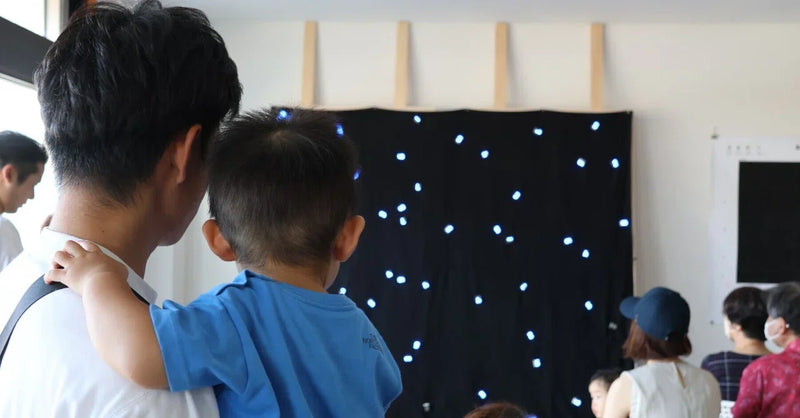
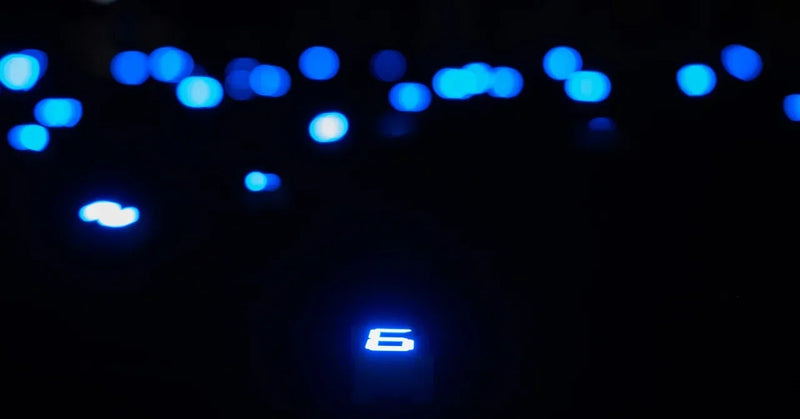
The "Sea of Time - TOHOKU" project is an art initiative created by contemporary artist Tatsuo Miyajima, known for his works using digital counters, with the hope of commemorating the victims of the Great East Japan Earthquake and passing on the memories of the disaster. It involves people living in Tohoku and those who care about the region.
3,000 people participated in workshops, and their thoughts are embedded in 3,000 LED counter gadgets, which glow in a 22.5 x 40m water basin, forming the artwork "Sea of Time - TOHOKU." It has been decided to build a new museum for the permanent installation of this work in Tomioka Town, Fukushima Prefecture. A press conference was held in Tokyo on February 3, 2025, and on February 7 of the same month, we hosted a bus tour for media representatives in the Hamadori area of Fukushima Prefecture. This article reports on the bus tour held on February 7.
Text and Photos by Satomi Haraguchi (Public Relations, "Sea of Time - TOHOKU" Project)
Feeling the pulse of Hamadori's business in an old school building
The drive from Marunouchi, Tokyo to Tomioka Town, Fukushima, takes about 4 hours. The tour began with an introduction from Akifumi Yamamoto of the NPO Invisible, who serves as the regional coordinator for the "Sea of Time - TOHOKU" project. He expressed his hope that participants would encounter the "environment" transformed by the Fukushima Daiichi Nuclear Power Plant accident, the "people" who have moved in or returned, and the "place" itself in Fukushima Hamadori, and feel the significance of a museum being built here.
The first stop was the Okuma Incubation Center (OIC) in Okuma Town. This facility, which opened in 2022, is a renovation of the former Ono Elementary School building, housing startup companies and also used by local residents. Okuma Town, which historically had various cultural exchanges within the prefecture, became a difficult-to-return zone after 3.11. After 11 years, a new place for various people and activities, the Incubation Center, has been reborn.
The broadcasting room has become a web conference room. The infirmary has become a nap room. In this way, while utilizing the former functions of the facility, it consists of business areas such as offices and co-working spaces, and exchange areas that anyone can use freely.
 Graffiti by students from that time remains on the wall of the former broadcasting room.
 The shop in the exchange space also sells products from resident companies.
 Traces of books that had fallen and remained on the floor of the former library, now an exchange space, from a long-term earthquake.
 Hamadori, where the number of returnees and new residents is currently increasing, still has scattered restaurants and convenience stores, and demonstration experiments by companies working on mobility solutions are underway.
The photo shows a product from one such company.
For lunch, bento boxes were provided by "RaFand", a café and restaurant in Yonomori, Tomioka Town, located south of Okuma Town. They reportedly use vegetables from farmers who have resumed farming in Tomioka Town, and the food was delicious. (Please note that OIC does not handle reservations for this, so please do not inquire with the facility.)
 Click here for more information about RaFand.
A community reunited after dispersion
The journey from Okuma Town to Tomioka Town was guided by Nanami Akimoto, a native of Tomioka Town who is now based in Hamadori and involved in various activities, including theater.
Nanami, who was a junior high school first-year student at the time of 3.11, initially evacuated to inland Chiba, then moved to Iwaki because she "still preferred the coast." After that, she returned to Hamadori. This was because even within the same Fukushima Prefecture, in Iwaki, the degree of damage was completely different, and it was difficult to openly discuss the nuclear accident. Amidst this, she experienced "looking at things from a detached perspective" through theater in high school and, reflecting on the disaster through art, decided to "return to Tomioka Town" at the age of 16.
 Nanami Akimoto, who served as the guide for the Hamadori tour
"Tomioka Town has good ground, so in the evening of March 11, 2011, I felt that houses hadn't collapsed as much as the seismic intensity suggested. Immediately after the earthquake, at the evacuation site, my family and I talked about returning home the next day. However, gradually the situation of the nuclear accident became clear, evacuation orders started coming out at night, and by the next morning, everyone was dispersing and evacuating west, to the next town and then the next, to municipalities that would accept them. This evacuation life continued for six years, and everyone built their respective lives at their evacuation destinations, with schools and workplaces, and the community in Tomioka Town fell apart."
Listening to Nanami, now 26, recount the reality of those days, looking out the bus window at houses still undergoing demolition, and passing by shops where time seemed to have stopped, each person on the bus spent time confronting the reality of the disaster-stricken area.
 The former rice fields, now equipped with solar panels.
The difficult-to-return zones were lifted in stages, area by area, and although some areas are still restricted, residents are gradually returning. One manifestation of this is educational institutions.
The five high schools in this region (Futaba District, Fukushima Prefecture) at the time, which had continued to operate as satellites in various evacuation locations, were closed. However, a new school, "Fukushima Prefectural Futaba Future High School and Junior High School," opened. Even before compulsory education, inquiry-based learning is part of the curriculum, demonstrating visionary activities that evoke the "future" in the school's name.
Furthermore, the "Yonomori Picnic" project, run by people currently living in Tomioka Town, was introduced. The background to this is that while they received much support after the disaster, being in a position of only receiving was also difficult. To create relationships of mutual support, Nanami explains that they opened a venue for expressive activities so that every participant could create a comfortable place for themselves, bringing together things they wanted to play with or things they wished existed, or setting up stalls.
 Yonomori Park, where the Yonomori Picnic is held.
A famous spot for cherry blossoms, where many cherry trees, some dating back to the Meiji era, bloom in spring.
 The sculpture "Moeru" by Norio Ide, located near Yonomori Park.
Nanami introduced the words of Norio Ide, a post-war poet and sculptor, who said, "For science to be correct, the imagination of art is also important," and "Be sympathetic to the existence of substances other than humans." This presented the perspective of how to face the fact that decommissioning the nuclear power plant will take over 100 years.
A place where art, memory, and nature converge, attracting people
Despite the frequent use of sea-related words in the project, such as "Hamadori" (literally "coastal road") and "the artwork will be installed in a location overlooking the sea," the bus tour had not passed any visible sea until this point. But finally, we arrived at a place where the sea could be seen: the planned site for the museum. Contemporary artist Tatsuo Miyajima guided us through this location, nestled among mountains on three sides and offering a quiet view of the sea.
 Contemporary artist Tatsuo Miyajima welcoming media representatives at the planned site.
In a surprise appearance, Tomioka Town Mayor Ikuo Yamamoto and Deputy Mayor Shinya Takehara spoke of their expectations and joy for the installation of "Sea of Time - TOHOKU" in this location, and for the construction of a museum that will become a gathering place for people.
 From left: Deputy Mayor Shinya Takehara, Tatsuo Miyajima, Mayor Ikuo Yamamoto.
From cedar forest to vineyard: The challenge of a winery facing community rebuilding
Next, we visited the vineyard of "Tomioka Wine Domaine," located near the planned site. This area was originally a cedar forest, and it was uncertain whether grapevines would even grow there. Nevertheless, starting with 300 saplings with volunteers, sometimes seeking expert advice through trial and error, they continue to plant trees, aiming for the current goal of 16,000.
The vineyard was guided by Junichiro Hosokawa, the general manager of Tomioka Wine Domaine, who originally worked in grape cultivation in Yamanashi Prefecture and has since moved to Tomioka Town.
 Junichiro Hosokawa, General Manager of Tomioka Wine Domaine.
Since the field is close to the sea, Tomioka wine is said to have a mineral-rich flavor.
He explained that the target number of 16,000 trees is the population of Tomioka Town before 3.11, and that grape cultivation and brewing, which started with 10 volunteers in 2016, have grown to involve 2,500 people. He added that these 2,500 people are the same as the current population of Tomioka Town, indicating an expansion of related population.
Furthermore, he stated that the winery is finally scheduled to open in April 2025, and with the opening of the winery, which will also feature a shop and restaurant, he expressed his expectation for an increase in related population. He concluded by saying, "Grape cultivation and wine brewing are not just about making delicious wine; the greatest objective is the re-formation of the community in Tomioka Town."
 A vineyard overlooking Tomioka Fishing Port and the Fukushima Daini Nuclear Power Plant. The area around the central tower is Fukushima Daini Nuclear Power Plant.
Encountering people thriving in Fukushima's "present"
At the end of the tour, individuals active in Hamadori also participated. After each person introduced their activities, an exchange session was held with the tour participants.
From breweries and inbound tourism to childcare support and creative work, it was impressive to hear directly from individuals about the diverse range of jobs thriving in Hamadori today, and to see how media representatives interacted with many people in a short time. It was also a moment where colleagues in Hamadori shared updates, and I felt that new ideas might emerge from such interactions.
Finally, the tour concluded with a strong message from Miyajima: "Hope is born from reality, not from theoretical discussions in an ivory tower."
Thank you very much to everyone who participated.
All participants (in alphabetical order, titles omitted)
- Nanami Akimoto (Coordinator)
- Takahisa Abe (Business Gateway Inc.)
- Tsuyoshi Owada (Chairman, Ado Puro Kogeisha Co., Ltd.)
- Taisuke Sato・Mizuki Sato (haccoba Inc.)
- Swastika Jaju (Futaba District Regional Tourism Research Association (F-ATRAs))
- Minami Suzuki (Co-representative, cotohana )
- Daiju Takahashi (Representative, NoMA Lab)
- Yoichiro Naka (President, Tohoku Enterprise Inc.)
- Rika Nishiyama (Representative, marutt Inc., Graphic Designer)
- Shoichiro Noda (President, Rabbit&Turtle Inc.)
- Trishit Banerjee (Futaba District Regional Tourism Research Association (F-ATRAs))
- Dai Fujita (President, Torifuji Honten Inc.)
- Tatsuhiro Yamane (Futaba District Regional Tourism Research Association (F-ATRAs))
- Kazumasa Yoshida (Photographer)
- Yuto Watanabe (Ichido Inc.)
 Everyone active in Hamadori who participated in the exchange meeting.
SPECIAL THANKS
Venue Provider
Food and Beverage Provided by
- Tomioka Wine Chardonnay 2023 (Provided by: Tomioka Wine Domaine)
- Tomioka Tamashii (Provided by: Tomioka Plus)
- haccoba zairai (Provided by: haccoba -Craft Sake Brewery-)
- Enju TSUTSUJI / SAKURA (Provided by: Ichido Inc.)
- Yonomori Baum (Provided by: BAUM HOUSE YONOMORI)
- Soka Senbei (Provided by: Tomioka Town Tourism Association)
Operational Cooperation
- Students from the Department of Community Design, Faculty of Design and Engineering, Tohoku University of Art and Design
Public Relations & PR