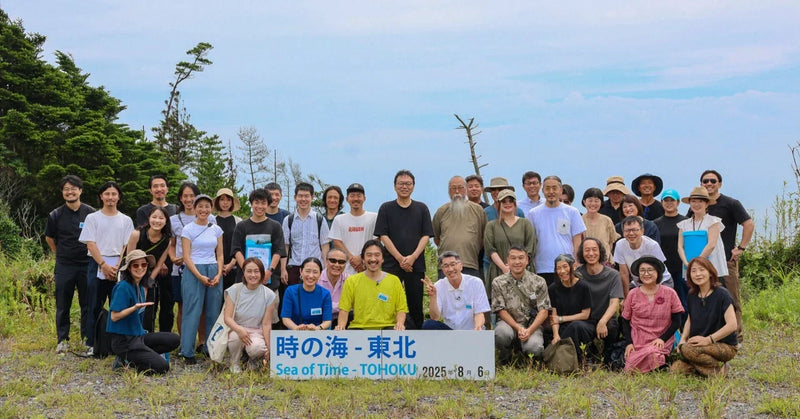
The "Sea of Time - Tohoku" project, based on the concepts of "It keeps changing," "It connects with everything," and "It lasts forever," is being created by contemporary artist Tatsuo Miyajima, known for his works using digital counters, together with the people living in Tohoku and those who care for Tohoku, with a wish for the repose of the victims of the Great East Japan Earthquake and the preservation of the memory of the disaster.
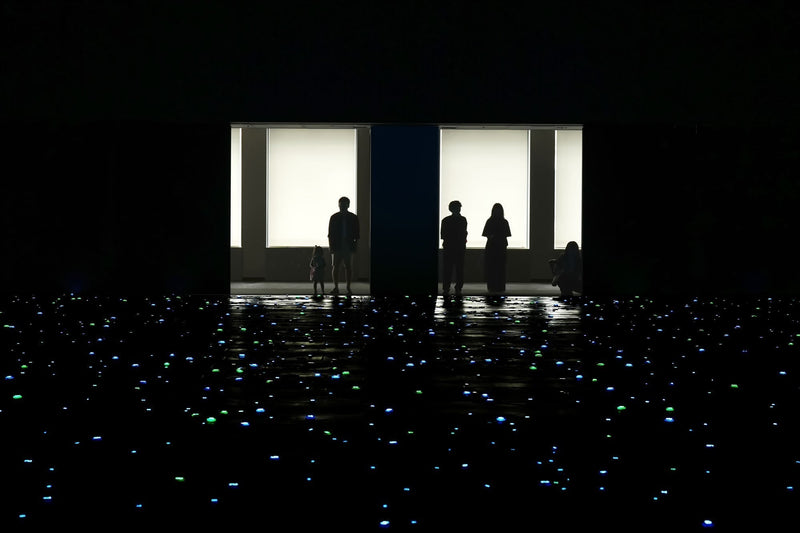
The artwork, which is envisioned as 3,000 LED gadgets counting "1-9" or "9-1" installed in a giant pool, involves 3,000 people who can each set the counting speed of their LED number to their desired time. The project is developing its activities with the goal of completing the work in 2027, through repeated workshops across Tohoku. On March 11, 2021, the tenth anniversary of the earthquake amidst the COVID-19 pandemic, the first online workshop was held, and currently, there are 1,215 participants (as of September 11, 2021).
Ten years have passed since the Great East Japan Earthquake. We look back at the beginning of the "Sea of Time - Tohoku" project and ask Tatsuo Miyajima what he has felt and thought through the project, and his aspirations for the future development of the project.
Interviewer
Tae Kahara (Program Officer, Arts Council Tokyo / Project Director, "Sea of Time - Tohoku")
The beginning of "Sea of Time - Tohoku"
——Please tell us what you were feeling and thinking around 2014, when you were conceptualizing this project, and your participation in the "Reborn-Art Festival" held in Ishinomaki City and Oshika Peninsula, Miyagi Prefecture in 2017, which was the starting line for its realization.
Miyajima: The catalyst was that around 2014, Tokyo had completely returned to normal, as if the earthquake had never happened. Immediately after the earthquake, we were all turning off lights and conserving electricity in the city, but I was appalled that it could be forgotten in just three years.
It's like the saying, "Once the danger is past, the pain is forgotten." I was shown the human tendency to forget, and I felt very disheartened myself. I strongly felt that I had to do something about it.
——On March 13, 2011, two days after the earthquake, you turned off the lights of your permanent installation 'Counter Void' in Roppongi, Tokyo, as a gesture of mourning for the victims. Then, you also participated in the "Relight Days" project, which was part of the "Relight Project" (April 2015 - March 2018) that started in 2015, and involved relighting for three days only from March 11. It seems that your feelings for Tohoku were already evident in your activities around 2014.
Miyajima: That's right. At the time of the earthquake, I was working to confirm the safety of students at Tohoku University of Art and Design where I was teaching, and many students expressed their desire to volunteer in the affected areas. So, I went in to volunteer first. The situation on the ground was still unclear. It was also to check if the students' safety could be secured, but for me, that was also the experience of witnessing the Great East Japan Earthquake firsthand. I can't forget that scene. Afterwards, I volunteered with my students. It wasn't as an artist, but as a human being who felt I had to do it.
Even after that, I always had a vague desire to do something for Tohoku. And three years after the earthquake, with a strong feeling that I had to do something now, I conceived the "Sea of Time - Tohoku" project. But I was still anxious, wondering if it could really be done. So, I consulted with Koichi Watari of the Watari Museum of Contemporary Art, and he invited me to participate in the "Reborn-Art Festival" together.
 Ishinomaki City, Miyagi Prefecture at the time of volunteering (2011)
——When you participated in the "Reborn-Art Festival," where did you start?
Miyajima: First, I started by listening to the stories of the people who had been affected by the disaster. The biggest concern was whether this project would be accepted or rejected by the people living in that area. So, I began by listening to the locals, explaining the project concept, and interviewing them to ask, "What do you think?"
Over about a year and a half of interviews, I strongly felt their desire "not to be forgotten." Also, what was impressive was that many said, "It'sありがたい (grateful) that people come and get involved." I felt that even as an outsider from Tokyo, and as an artist, I was accepted, and that's why I was able to move forward with the realization of the project.
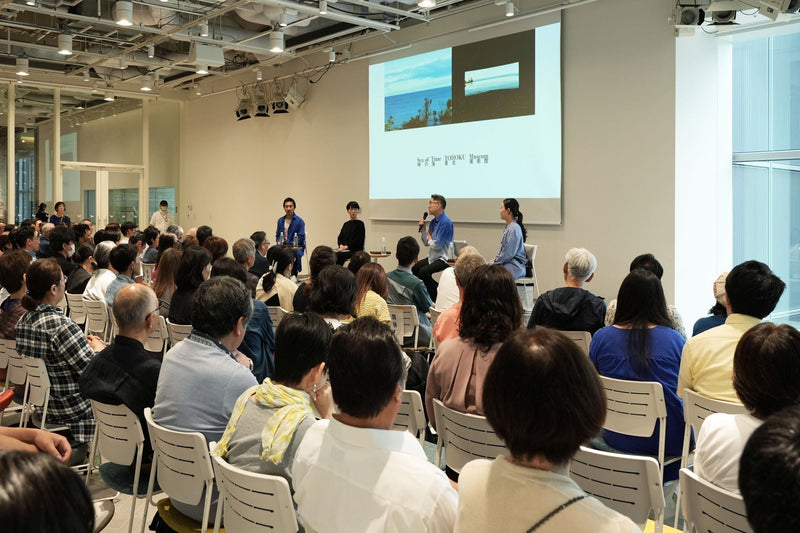
 A scene from the workshop. Tatsuo Miyajima is on the left.
——At the 2017 "Reborn-Art Festival," you temporarily displayed 300 LED gadgets, one-tenth of the total. What were your thoughts when it was completed?
Miyajima: It truly felt like standing at the starting line. It was the moment when the vague concept of "Sea of Time - Tohoku" took shape, and I felt a sense of confidence that it might actually be realized. At the same time, at that time, there were still deep scars from the disaster throughout the town, and many people were living in temporary housing, so while I felt a step towards realization, I also remember having an indescribably ambivalent feeling.
 Exhibition view of Reborn-Art Festival 2017.
Encounters with people living with the "sea" in Tohoku
——Mr. Miyajima, you mentioned that almost no one spoke ill of the "sea" when you spoke with various people in Tohoku. This project also evokes the "sea," but what did you feel about the relationship between the people of Tohoku and the "sea"?
Miyajima: The image that immediately came to mind was the Tohoku version of 'Sea of Time'. 'Sea of Time' is my debut work, created in 1988. Of course, I considered whether the motif of "sea" was appropriate in an area that had suffered immense tsunami damage. However, during interviews with local people, almost no one expressed a rejection of the "sea." Knowing their feelings for the sea, I felt the indomitable spirit of the people living in Tohoku.
Actually, I know this because both my parents are from Tohoku, but people from Tohoku are quiet. They are calm, resolute, and strong-willed. Even after repeated tsunamis, they accept everything, swallow all their sorrow, and yet, there is a determination to live in this place, a kind of "strength of life" that I feel.
——So, along with their will to live there, you felt a culture of living rooted in that land.
Miyajima: Besides the indomitable fighting spirit of "we won't be defeated," I also sensed the tolerant way people in Tohoku confront nature, a powerful force that cannot be overcome by human strength. That's why I felt that this project and contemporary art would be accepted, and I have hope that even after the work is created, it will take root in that land and be nurtured.
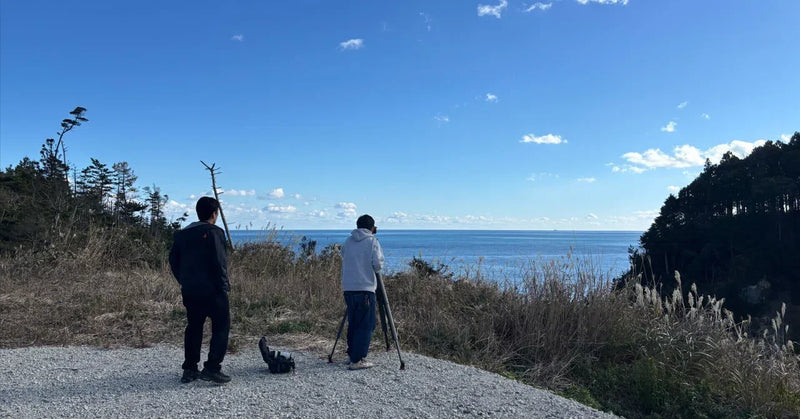
 We are also looking for a permanent installation site in Tohoku, visible from the coast.
(*Image is for illustration purposes only)
Everyone is a creator, and everyone is involved
——In this project, you use a collaborative artist system that designates those who set the time for the LED gadgets as "collaboration artists," and those who support the project financially with a passion for Tohoku as "support artists." Why are you doing this?
Miyajima: Contemporary art is often difficult to understand. So, it tends to be seen as someone else's problem. That's why I believe that forming a relationship is important, even before understanding or not understanding. When an involvement is formed, an "event" is created. I believe understanding comes much later. As long as there is involvement, everyone should be able to understand at their own pace.
It's like, with contemporary art, jump before you look! Think about it later! That's my feeling.
It gets complicated when you try to understand before you even encounter it. It's important to start by forming a relationship, by encountering it, and I created this collaborative artist system because I wanted to achieve that.
 Some families participate together.
I believe that as more people feel they are personally involved, new relationships will emerge. For example, when the work is completed in a few years, they will bring their families, children, relatives, and friends to see it. And surely, new conversations will arise while looking at the work. I am creating this work with the expectation that relationships will broaden and deepen through it.

Carrying the thoughts of 3,000 people in numbers
——This project is recruiting participants through workshops in various parts of Tohoku, online workshops, and a website. What do you emphasize in these workshops?
Miyajima: In the "Sea of Time - Tohoku" artwork, participants set the counting speed of their LED gadget to their desired time (from 0.2 seconds to 120 seconds), and at that time, we carefully listen to what feelings they had when they chose that number and what thoughts they have about this project. Listening to each individual's thoughts is what I value most.

——So you're building up the thoughts of various people, one by one. You've held workshops in Ishinomaki, Rikuzentakata, Sendai, Kamaishi, Iwaki, and other places. Could you tell us about any memorable incidents?
Miyajima: When we held a workshop in Sendai, a man from Minamisoma participated. He was thinking by himself for a very long time, about an hour. When I talked to him, he told me about his various experiences after the disaster, and how he had so many numbers related to them that he didn't know what to do. Seeing him, my heart was moved as I realized that this workshop was a time and place for him to recall his disaster experiences and churn through various thoughts.
Also, it may not be directly related to the earthquake, but a participant from Kanagawa who had lost her young daughter said that thinking about Tohoku reminded her of her daughter, and she deeply understood the feelings of the people in Tohoku. She had set her daughter's birthday as the time setting, as a way to mourn the deceased. Listening to her story, I felt that this project had become a vessel for accepting one's own close encounters with death and the feelings of cherishing loved ones.
 Workshop at Sendai Mediatheque (2018)
Art exists to live in the present, from here, into the future
——Remembering the deceased also means realizing your current position. And indeed, it's also realizing that "I was alive with that person at that time." Why do you think such time and place for remembering "that time, that person" are important?
Miyajima: Looking back at the past, how do we live from here, now, into the future? I believe art is involved in that. 3.11 was a paradigm shift for our civilization, a moment when the world changed dramatically. There must have been things we seriously worried and thought about then. But somehow, they tend to be forgotten over time, don't they?
Even the current global pandemic, once vaccinations progress and effective treatments become available, will surely be forgotten someday. That's precisely why I think we need a time and place to re-examine how we want to live from now on. And as the artist, I hope that the "Sea of Time - Tohoku" project can be a place where we can go to meet "that person, at that time," and a place where we pledge to live from here, now, into the future.
Future developments of the "Sea of Time - Tohoku" project
——Please tell us about the future development of the project. The spread of the novel coronavirus infection continues, and it remains difficult to visit Tohoku or hold workshops there, but this year, you are planning online workshops for autumn and beyond, aren't you?
Miyajima: It will still be difficult to visit the local area for a while, but I decided to hold online workshops from October to December to move forward step by step towards the realization of the project. We will talk about the "Sea of Time - Tohoku" project and conduct interactive workshops where participants, myself, and everyone attending the workshop will share their time settings and the thoughts put into the numbers. In fact, we are newly challenging ourselves to incorporate information accessibility initiatives into the project. For example, we are preparing dates with sign language interpreters so that deaf individuals can also participate. Also, you can continue to participate via the website.
——Finally, as you aim for completion in 2027, you plan to recruit up to 3,000 participants and permanently install the artwork on a hill overlooking the sea in Tohoku. What kind of scenery do you imagine will unfold there, and what kind of experience will it be, once the artwork is completed?
Miyajima: I envision a scene where many people, young and old, are at the venue, quietly looking at the artwork, or sitting on the grassland outside the building, gazing idly at the sea. It feels like everyone is quietly contemplating various thoughts.
I want to make it possible to walk around the artwork, approach it, and also create a slightly elevated area within the exhibition space so that people can view the whole thing from above. And I also want to create a system where participants can find their own LED gadgets. With such a magnificent number of 3,000 pieces, I want to move forward step by step, considering how to achieve it with the cooperation of various people.
 Sketch for "Sea of Time - Tohoku"
(text by Tae Kahara)